Services
Pickup & Delivery Strategy

Grow the Service. Test the Capacity to Deliver.

Connect pickup and delivery opportunity to the work needed to serve it. Evaluate geographic access, order capacity, picking, staging, and delivery alongside the customer experience and economics.

Start With the Business Decision.

Bring a specific operating challenge or an alternative you want to test. These connected views show how the work can support your decision.

01Locate the Opportunity

Where could pickup and delivery add customer value?

What We Compare: Geographic access, service costs, and projected customer value

02Set the Capacity

How many orders can the store support?

What We Compare: Order capacity, workload, and unserved demand

03Follow the Order

Where does fulfillment lose the customer?

What We Compare: Completion, cancellations, and fulfillment quality

04Test the Delivery

What does the service require in practice?

What We Compare: Delivery travel, on-time performance, resource use, and cost

Explore the Analysis Behind Each Decision.

Illustrative store and simulation views show the types of questions we can work through with your team.

01

Locate the Opportunity: Where could pickup and delivery add customer value?

Explore customer access relative to your stores and competing networks. Compare geographic service opportunities under defined customer-value and service-cost assumptions.

Geographic analysis of delivery opportunity relative to store networks.
Illustrative model or simulation view. View Full-Size Image

Back to the Decision Overview

02

Set the Capacity: How many orders can the store support?

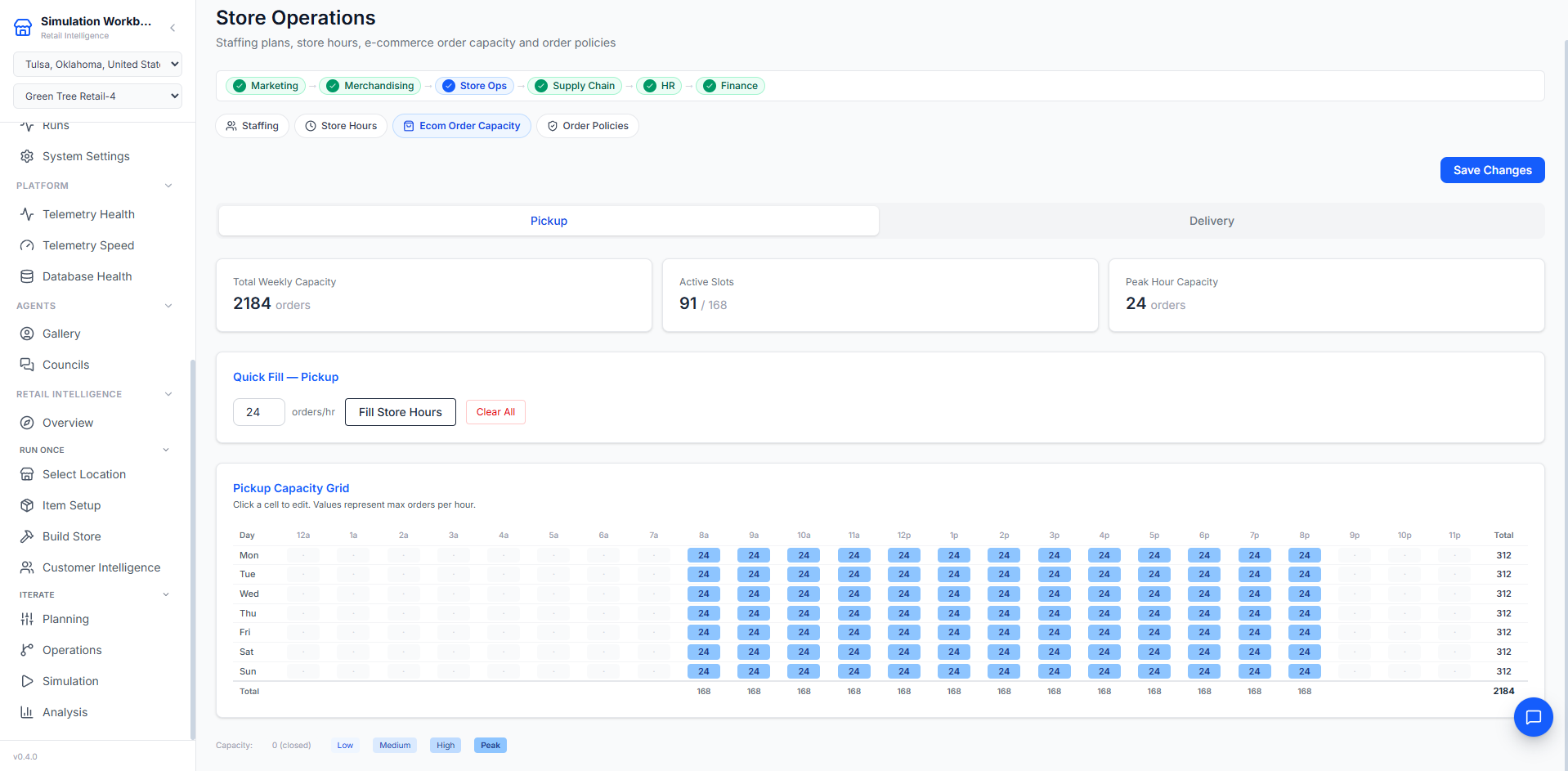
Test pickup and delivery slot capacities alongside fulfillment staffing. Examine the workload created by the order plan and where demand exceeds the capacity offered.

Pickup and delivery order-slot capacity configuration for store operations.
Illustrative model or simulation view. View Full-Size Image

Back to the Decision Overview

03

Follow the Order: Where does fulfillment lose the customer?

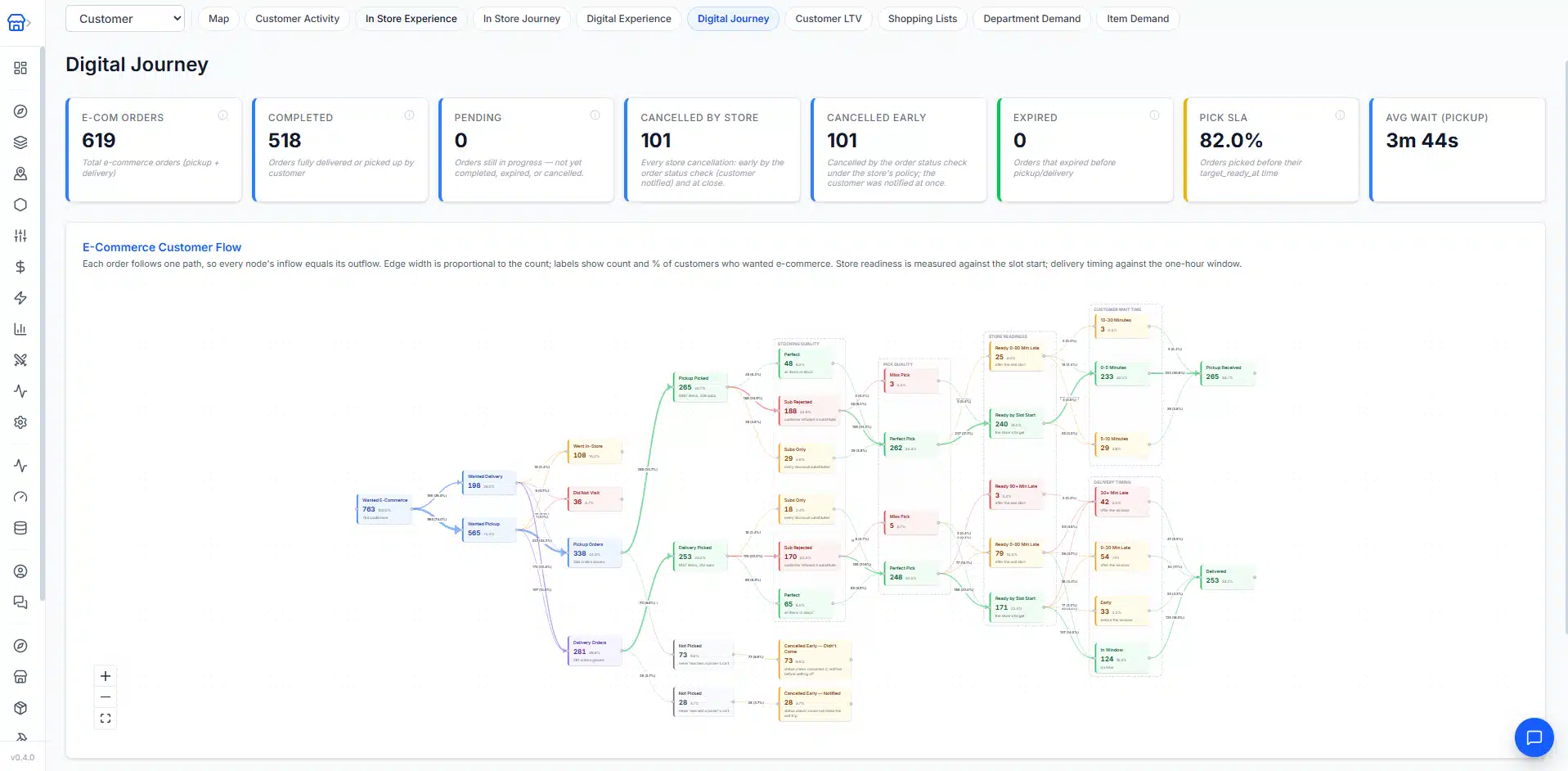
Review the digital order journey from demand through fulfillment. Compare cancellations, completion, and service outcomes while testing changes to operating assumptions.

Digital customer journey showing simulated order flows and fulfillment outcomes.
Illustrative model or simulation view. View Full-Size Image

Back to the Decision Overview

04

Test the Delivery: What does the service require in practice?

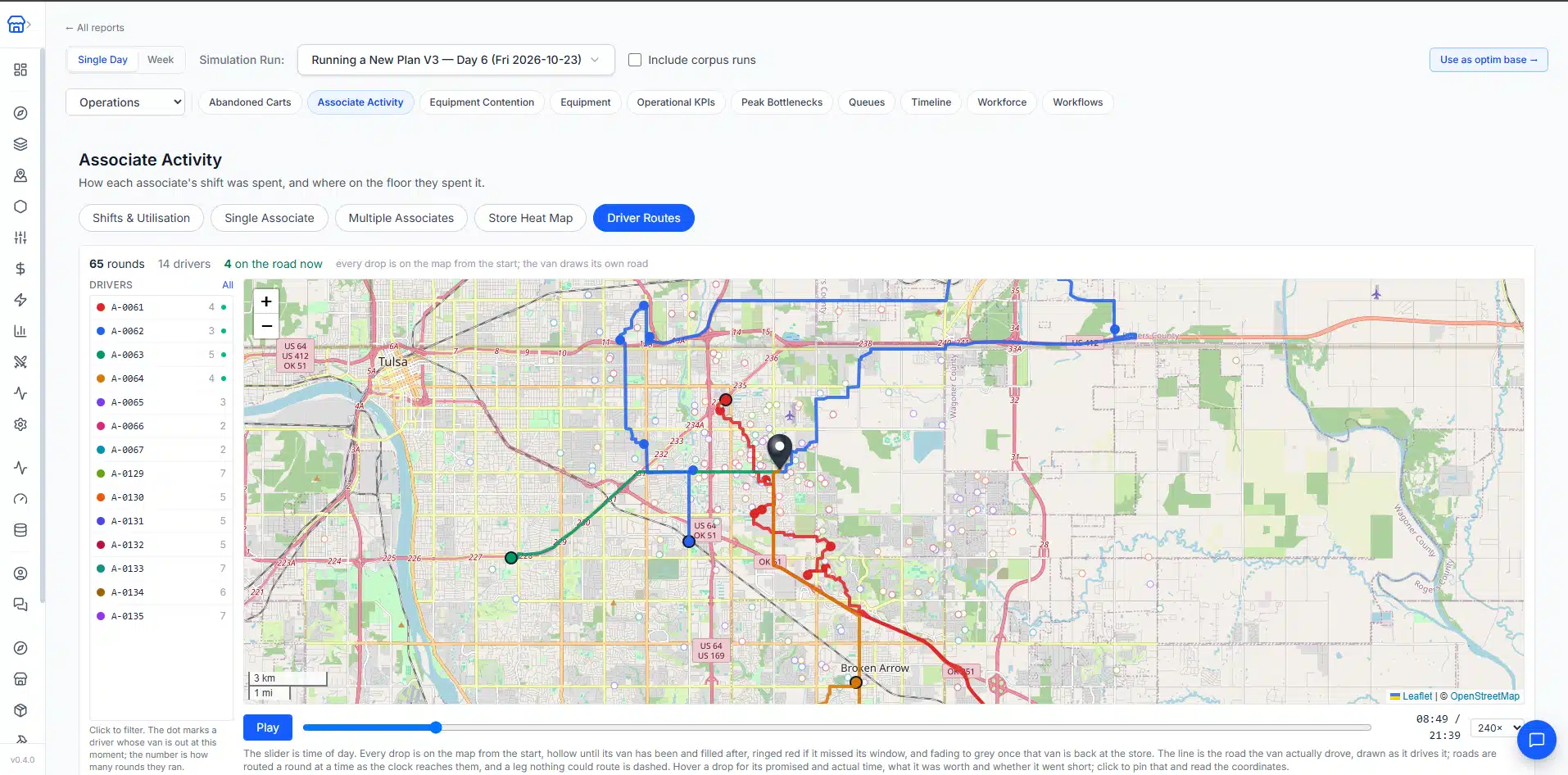
Examine delivery paths and the resources needed to complete the work. Compare fulfillment alternatives with the store workload and financial result.

Delivery driver paths displayed on a geographic map.
Illustrative model or simulation view. View Full-Size Image

Back to the Decision Overview

Connect the Decision Across Your Business.

A change to one part of the store affects the others. Explore the related services and the platform behind the analysis.

Pickup & Delivery Strategy: Common Questions

Common questions about buy online, pick up in store (BOPIS), delivery from stores, and fulfillment capacity.

Where should a retailer offer pickup and delivery?

We map customer convenience to your stores and to competing networks, then compare geographic service opportunities under defined customer-value and service-cost assumptions. This analysis shows where pickup or delivery could add customer value as well as where the cost of serving an area outweighs it.
How many pickup and delivery orders can a store handle?

This is a core question for every store. Physical and operational constraints both need to be explored to make sure the buy online, pick up in store (BOPIS) and delivery orders offered can meet customers’ fulfillment expectations. Our simulations let store managers change the number of orders offered throughout the day to see where utilization is high and customer experience stays strong.

How do buy online, pick up in store (BOPIS) orders affect store operations?

For store-fulfilled pickup orders, picking and staging add work alongside service to walk-in customers. We model order capacity, picking, staging, and fulfillment staffing alongside in-store work, so you can see the workload an order plan creates and how it affects the rest of the store.

Why do online orders get cancelled, and how can fewer be lost?

Customers and stores both cancel orders, for many reasons. We follow the digital order journey from demand through fulfillment and compare cancellations, completion, and fulfillment quality. Changes to operating assumptions, such as staffing or capacity, can then be tested to see which alternatives reduce modeled cancellations under the selected assumptions.

What does delivery from stores require in practice?

Customers expect deliveries to arrive on time, every time. That reliability builds the trust that drives retention, and retention drives the economics of delivery. We examine delivery paths and the resources needed to complete the work, including delivery travel, on-time performance, resource use, and cost. Fulfillment alternatives are compared with the store workload and the financial result.

How reliable are the simulation results?

Simulation outcomes depend on the inputs and assumptions used. We review those assumptions and the practical implications with your team.

What Would You Like to Improve?

Share the decision you're considering and the tradeoffs you need to understand.

Simulation outcomes depend on the inputs and assumptions used. We review those assumptions and the practical implications with your team.