Services
Customer Experience Improvement

Improve the Experience. Strengthen Customer Value.

Find where the shopping experience breaks down and test changes to the store conditions behind it. Connect customer journeys, availability, waiting, and fulfillment to the operating decisions your teams make.

Customer Journeys and Associate Work in One Store.

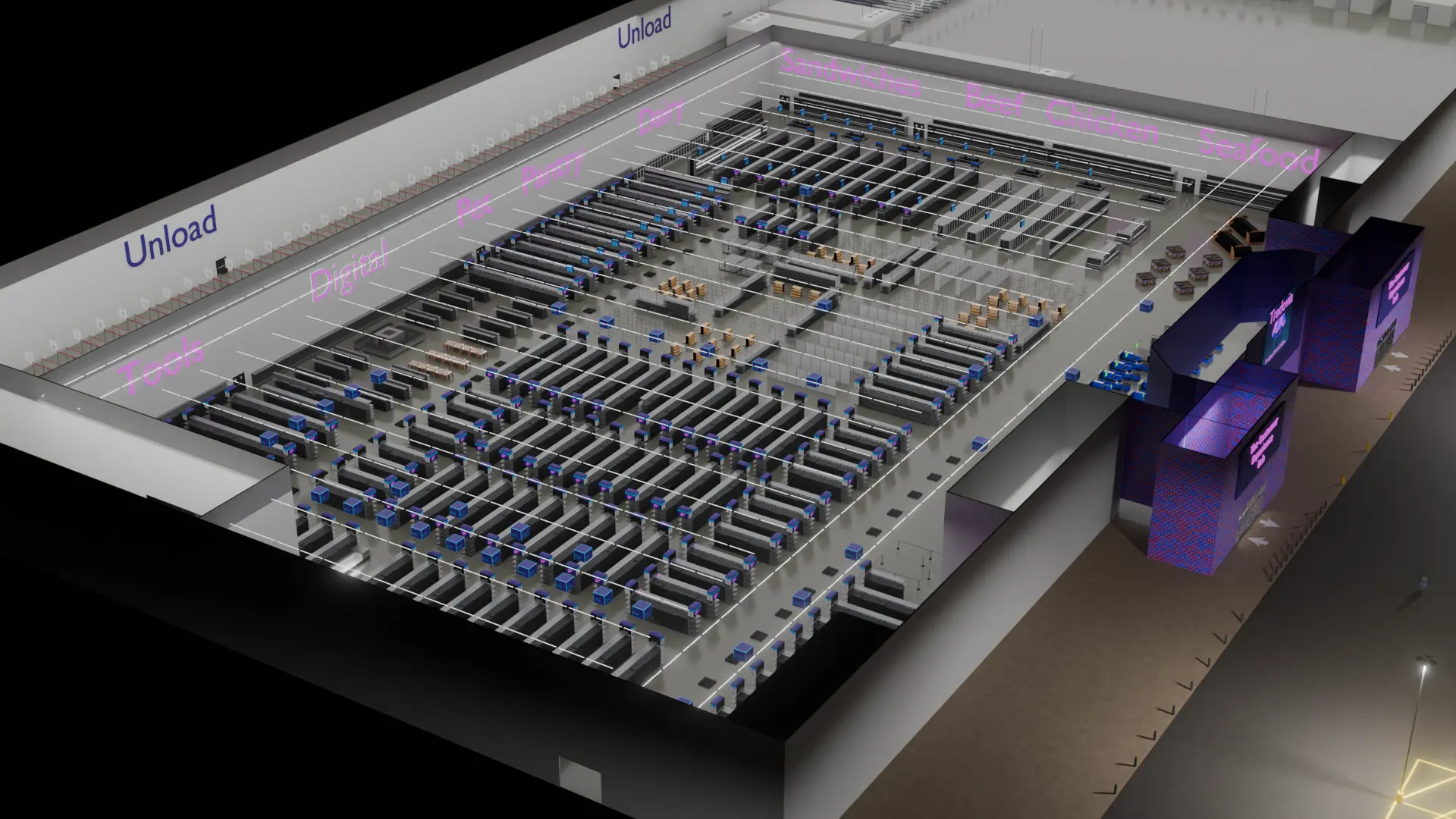
We build a 3D digital twin of your store, including fixtures, inventory locations, checkout lanes, stockrooms, receiving areas, and parking and pickup spaces. This virtual environment provides the physical infrastructure the simulation needs to model how customers and associates move, work, and interact.

Virtual customers shop, wait in line, and check out while associates receive inventory, replenish shelves, process returns, and fulfill pickup and delivery orders. By bringing these activities into one store model, we can examine how layout, product availability, staffing, and workflows shape the customer experience.

Overhead 3D store model showing sales-floor aisles, checkout areas, and receiving zones.
Illustrative 3D store environment. The journey and operating assessments below explore what happens within it. View Full-Size Image

Start With the Business Decision.

Bring a specific operating challenge or an alternative you want to test into the simulation. These post-simulation assessments show the inner workings of your store while it's in motion and highlight where the customer experience falls short.

01Understand the Journey

Where do customers encounter friction?

What We Compare: End-to-end journey outcomes for in-store shopping and e-com pickup and delivery.

02Reduce Waiting

Which operating changes could improve service?

What We Compare: Queue lengths, waiting time in line, and cart/line abandonment rates.

03Improve Availability

Can the store deliver the intended shopping experience?

What We Compare: Shopping paths, availability, out-of-stock events, substitutions accepted and rejected.

04Connect Experience to Value

What might better service mean for customer value?

What We Compare: Retention effects, customer lifetime value, and operating economics

Explore the Analysis Behind Each Decision.

Illustrative store and simulation views show the types of questions we can work through with your team.

01

Understand the Journey: Where do customers encounter friction?

Map shopping, checkout, and fulfillment journeys to identify where customers wait, leave, or complete their trip. Review the customer outcome alongside the work and resources that shaped it.
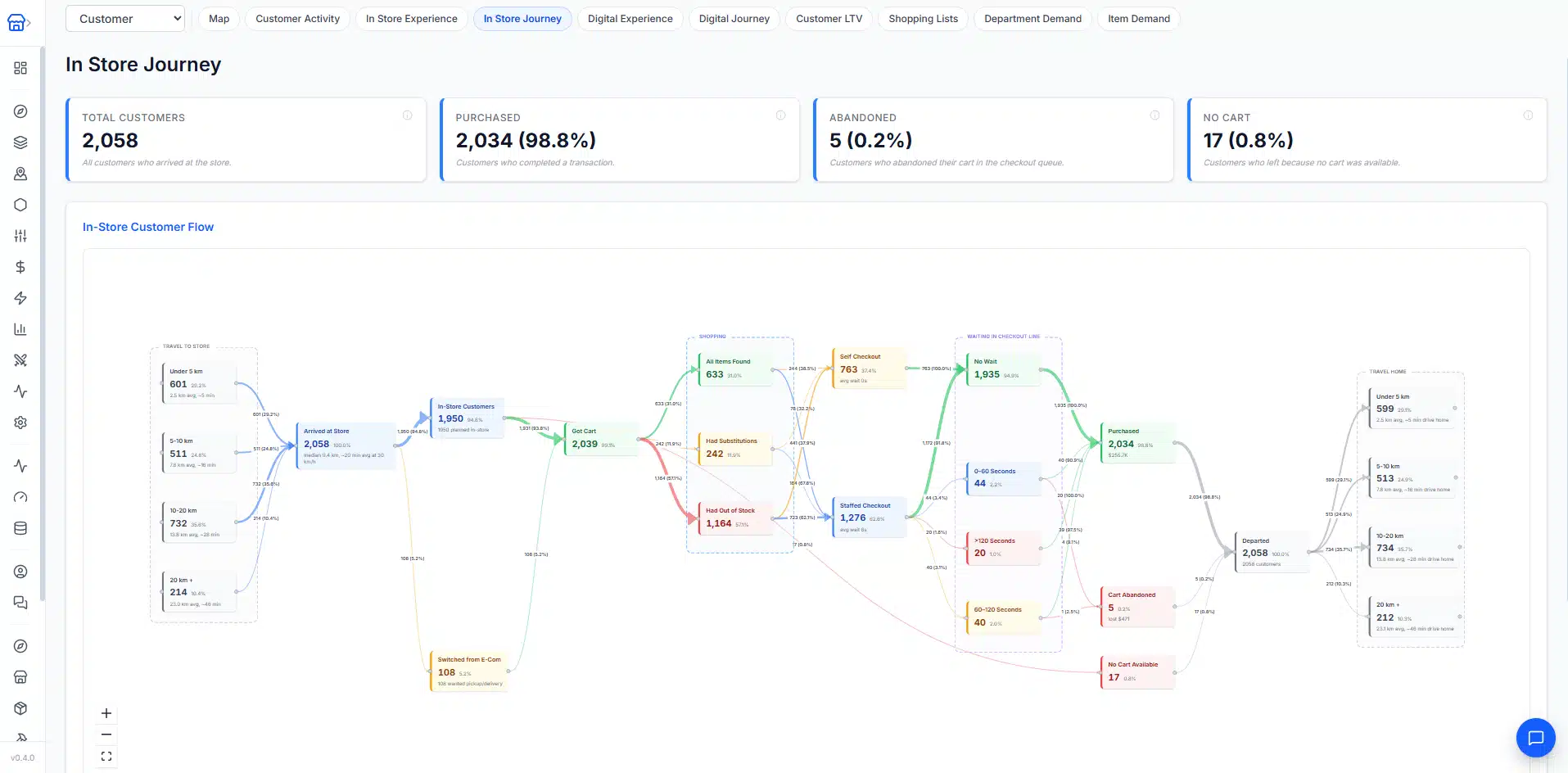
Customer journey analysis showing simulated store visits and journey outcomes.
Illustrative model or simulation view. View Full-Size Image

Back to the Decision Overview

02

Reduce Waiting: Which operating changes could improve service?

Compare checkout staffing and workflow alternatives against queue patterns throughout the day. Assess whether an improvement in one part of the journey creates pressure elsewhere.

Checkout queue analysis showing changes in queue length across the simulated day.
Illustrative model or simulation view. View Full-Size Image

Back to the Decision Overview

03

Improve Availability: Can the store deliver the intended shopping experience?

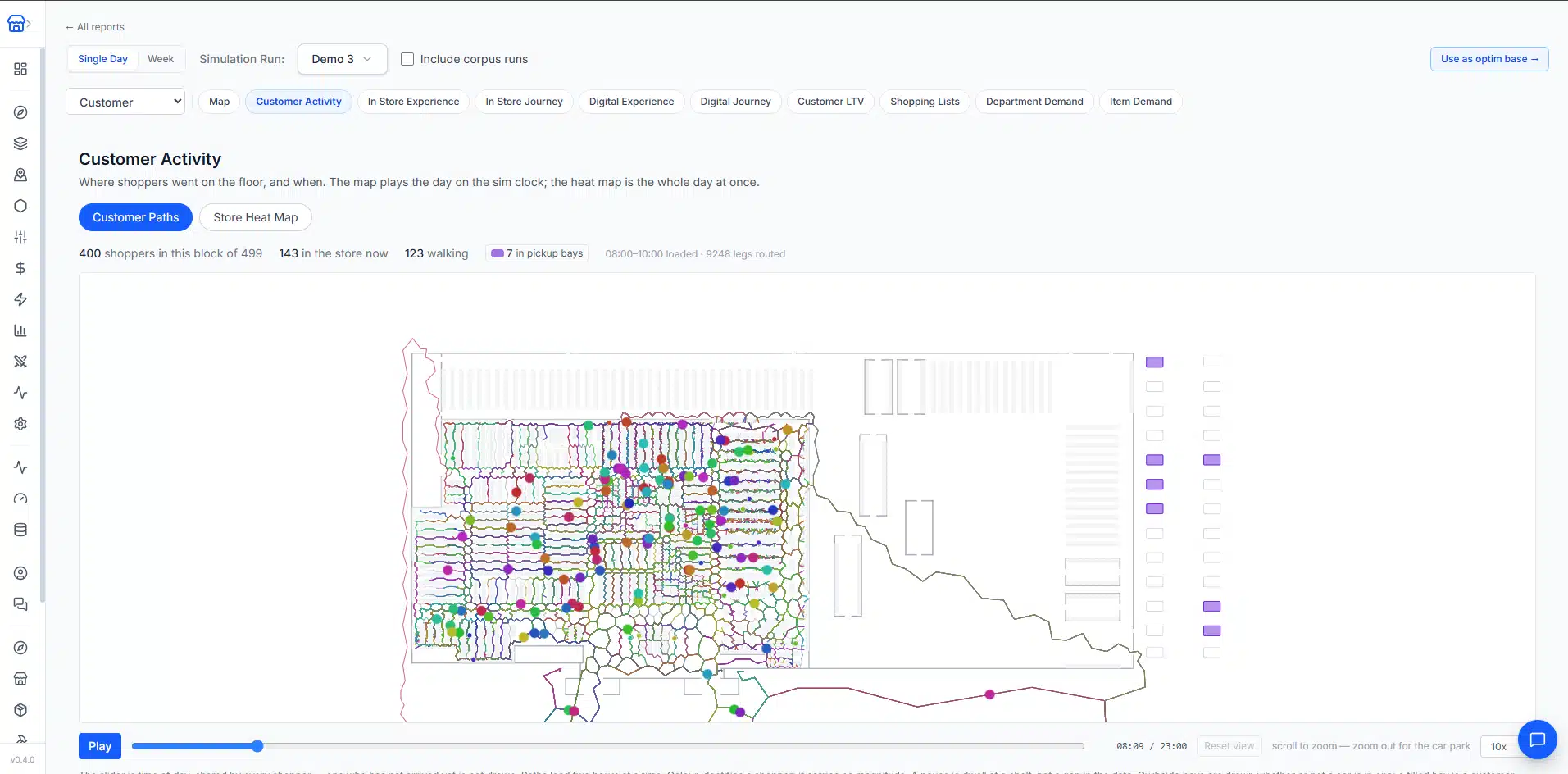
Evaluate how inventory, replenishment work, and employee staffing affect the customer journey and store financials. Use simulations to examine the experience in the context of your store layout(s).

Modeled customer movement paths through the store floor plan.
Illustrative model or simulation view. View Full-Size Image

Back to the Decision Overview

04

Connect Experience to Value: What might better service mean for customer value?

Review how experience factors influence retention and customer lifetime value under the operating plan for your store. Compare the operational changes and their costs to the overall customer experience.

Customer retention component analysis showing the modeled contributions of experience factors.
Illustrative model or simulation view. View Full-Size Image

Back to the Decision Overview

Connect the Decision Across Your Business.

A change to one part of the store affects the others. Explore the related services and the platform behind the analysis.

Customer Experience Improvement: Common Questions

How simulation helps retailers find and fix the parts of the store experience that cost them customers.

How can retailers improve the customer experience in stores?

Start with where the experience breaks down, such as waiting, unavailable products, or failed pickup and delivery orders, and test changes to the store conditions behind it, such as staffing, replenishment, layout, or workflows. We use a digital twin of your store to compare those alternatives before they reach a customer in a physical store.

How do you analyze the in-store customer journey?

Virtual customers shop, wait in line, and check out in a model of your store while associates receive inventory, replenish shelves, and fulfill orders. We compare end-to-end journey outcomes for in-store shopping and for pickup and delivery, showing where customers wait, leave, or complete their trip.

How can checkout wait times be reduced?

Many levers can reduce checkout wait times, and each carries a different cost: opening more registers through added staffing, adding registers, reducing the marketing spend that drives traffic, adding nearby stores, expanding pickup and delivery options, or offering app-based self-checkout. We compare these alternatives to see which takes pressure off the front of the store at the lowest cost.

How do out-of-stocks affect the customer experience?

When products are unavailable, customers change their shopping paths, accept or reject substitutions, or leave without buying. We evaluate how inventory, replenishment work, and staffing affect availability and the customer journey.

How does customer experience affect customer lifetime value?

Customer experience influences whether customers return and how long they stay. Customer lifetime value translates those patterns into their expected economic contribution over time. We review how waiting and out-of-stock events influence retention and, in turn, increase or decrease customer lifetime value.

How reliable are the simulation results?

Simulation outcomes depend on the inputs and assumptions used. We review those assumptions and the practical implications with your team.

What Would You Like to Improve?

Share the decision you're considering and the tradeoffs you need to understand.

Simulation outcomes depend on the inputs and assumptions used. We review those assumptions and the practical implications with your team.